
B2B commerce in the Middle East was broken — and nobody had fixed it yet.
Businesses across the MENA region were sourcing supplies the same way they had for decades — phone calls, bilateral relationships, offline catalogues. There was no central platform. No price transparency. No reliable way to compare suppliers or place bulk orders without weeks of back-and-forth.
Tradeling saw the opportunity. The vision was clear: build the region's most comprehensive B2B marketplace, purpose-built for how businesses in the Middle East actually operate. What they needed was a partner who could take that vision and turn it into something real.
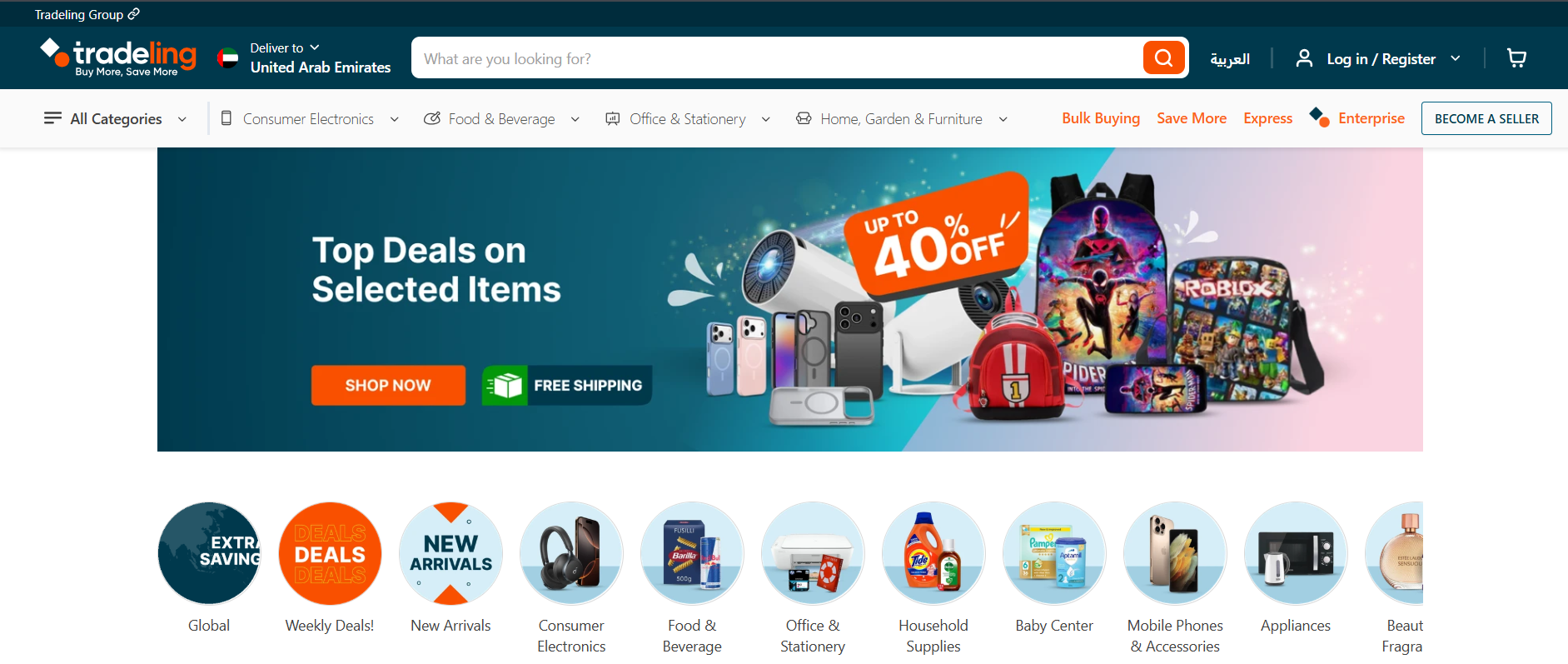
B2B is harder than it looks. Far harder than consumer e-commerce.
Business buyers don't browse and impulse-buy. They have approval workflows, minimum order quantities, volume pricing, preferred suppliers, and delivery SLAs they depend on. A platform that ignores these realities doesn't just underperform — it fails.
Tradeling also had no structured product roadmap when Uphead came on board. Feature development was reactive. Priorities shifted with each stakeholder conversation. There was no shared view of what to build, in what order, or why.
We came in as a full partner — not just a vendor.
Uphead ran three parallel workstreams, kept in continuous alignment so every commercial decision shaped the product, and every product decision shaped what was built.
"Strategy, product, and execution — running in parallel, never in silos. That's the difference between a plan that collects dust and a platform that actually scales."
Product Roadmap Ownership. We built Tradeling's roadmap from the ground up — prioritising features by commercial impact, not by whoever shouted loudest. Every item was grounded in one question: will this drive seller acquisition, buyer retention, or platform differentiation?
Strategic Advisory. We worked directly with leadership to sharpen competitive positioning, identify the buyer and seller segments most likely to drive early growth, and make faster, better decisions in a market that wasn't waiting.
End-to-End Tech Execution. From product design through to development and launch, we kept the delivery on schedule, on scope, and built to handle the next stage of growth — not just the current one.
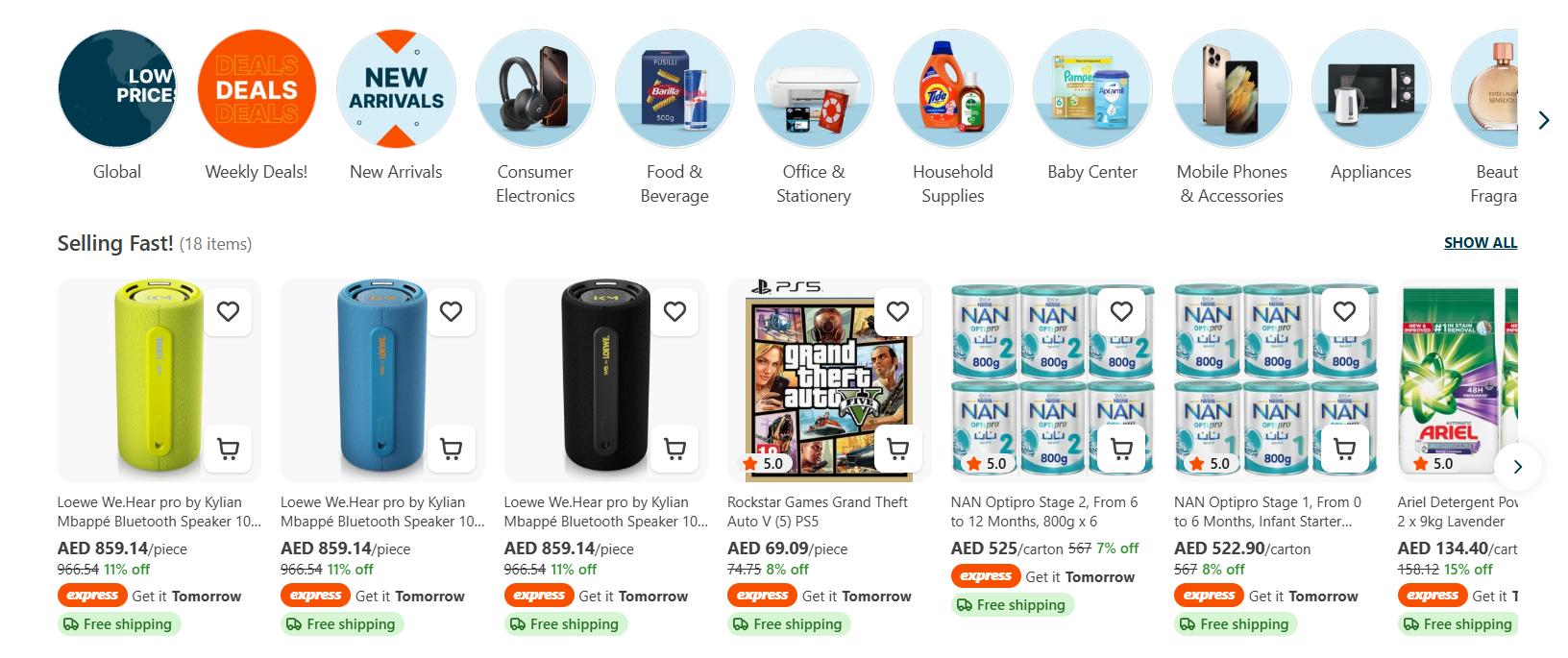
MENA's fastest-growing B2B marketplace — live and scaling.
Tradeling launched as a full-stack B2B marketplace with a platform built to grow. What started as a vision with no roadmap became one of the most recognised B2B platforms in the Middle East.